
About
What Qwan is, and who is building it.
Qwan is a table ordering and payment app. Guests scan a QR code on the table, order from their own phone and pay their share. The restaurant receives the orders on a kitchen screen. The first restaurant opens in Paris in October 2026.
Oct. 2026
the first restaurant opens
10 to 20
restaurants targeted by January 2027
0 %
commission on dishes, a flat subscription instead
Paris
neighbourhood by neighbourhood, starting in the 11th
The wider picture
Why we are building Qwan
For the past ten years, almost every tool built for restaurants has been designed to move the meal out of the building: delivery, click and collect, dark kitchens. They work, and they take up to 30 % of the order.
That shift reaches well beyond restaurants. We work from home, we order the groceries online, we spend the evening in front of a screen. Every tool that saves us time also hands us one more reason to stay in.
Qwan runs the other way. It is an app built for sitting down at a table together, not for avoiding it. The phone is there to order, to follow what the table has taken, and to pay your share.
There is a more practical reason as well. In a dining room the two longest waits are the one before ordering and the one to pay. Both are moments when a table is occupied and the service is not moving.
And a table is not a customer. It is several people ordering at their own pace, sharing the dishes in the middle, and splitting one bill at the end. Most ordering software handles one cart and one payer.
The name
Where the name comes from
Qwan comes from quán: in Vietnam, the eatery at the end of the street. Plastic stools, a menu that runs too long, people spilling onto the pavement. You order too much, you share everything, and you leave two hours later than you meant to. Every country has its own version, the bistro, the tavern, the pub down the road. That is the evening Qwan is trying to make simpler.
The product
What Qwan does
Two interfaces: one for the table, one for the kitchen.
For guests
- Scanning the QR code on the table opens the restaurant's menu. There is no account to create and no app to install.
- Several people join the same table from their own phones and watch the order fill up live.
- Dishes meant for the middle of the table are marked as shared, so the order matches the meal.
- Everyone pays their share: evenly, by item or by exact amount. Card, Apple Pay, the server's terminal or cash.
For restaurants
- Orders arrive on a kitchen screen, with a sound alert and the table number.
- A sold-out dish comes off the menu in one gesture, and ordering pauses when the room is overwhelmed.
- Money is paid straight into the restaurant's own account, through SumUp or Stripe Connect.
- The subscription is flat. Qwan takes no percentage of any dish.
Development
Where the product stands
The design work is finished. V1 is in development, for an opening in October 2026.
- The technical specifications are written and settled: architecture, data model, API, authentication, roles, payments, security and compliance.
- The design system is finished and already in production: colour, type, components and accessibility rules. It is the one this site runs on.
- The flows are designed end to end: restaurant discovery, table ordering, split payment, kitchen display and back office.
- V1 is in development. It opens in October 2026 in the first restaurants.
- Native iOS and Android apps follow in spring 2027. V1 is a web app: you scan the code, the menu opens in the browser, there is nothing to install.
The team
Who is building Qwan
There are two of us, based in Paris. Isabelle looks after the restaurants, Mehdi after the product and the engineering.
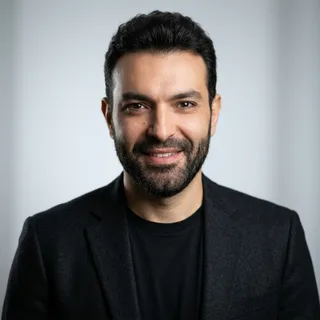
Mehdi Naji
Co-founder & CEO
A developer for eight years, trained at École 42 and previously at several startups. He builds the guest app, table ordering, the merchant tools, the kitchen display and the infrastructure.

Isabelle Reytier
Co-founder & Head of Sales
She ran the Motown Bar, in the 10th arrondissement of Paris, for more than fifteen years. She then spent ten years in field sales as an area manager for Groupe SEB, Juva Santé and Ethicable. At Qwan she meets the owners, sets up their rooms and works their first services with them.
The first restaurants
The first restaurant opens in October 2026
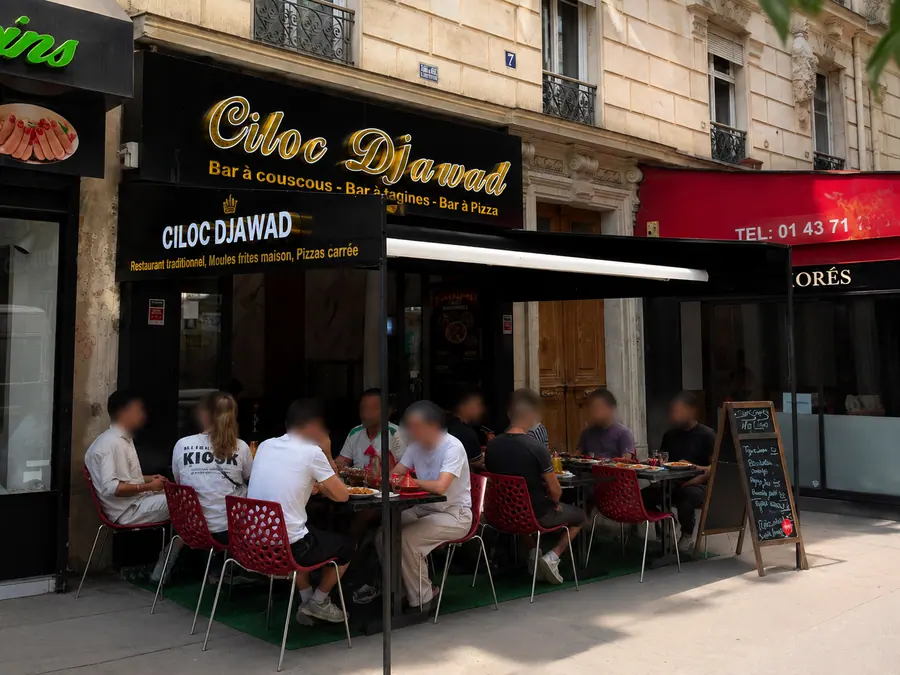
Ciloc Djawad, on avenue Philippe Auguste in the 11th arrondissement, is the first partner restaurant. Others follow over the weeks after that: the target is ten to twenty rooms by January 2027.
We group restaurants by neighbourhood rather than scattering them across Paris: the same guests move from one address to the next, and a room running Qwan sits close to others. Every restaurant is set up in person, with the tables numbered, the menu loaded and the first services worked alongside the team.
Ciloc Djawad serves couscous and tagines, at lunch and in the evening, with a terrace on the street.
Get in touch
For any question about Qwan, the product or the project.